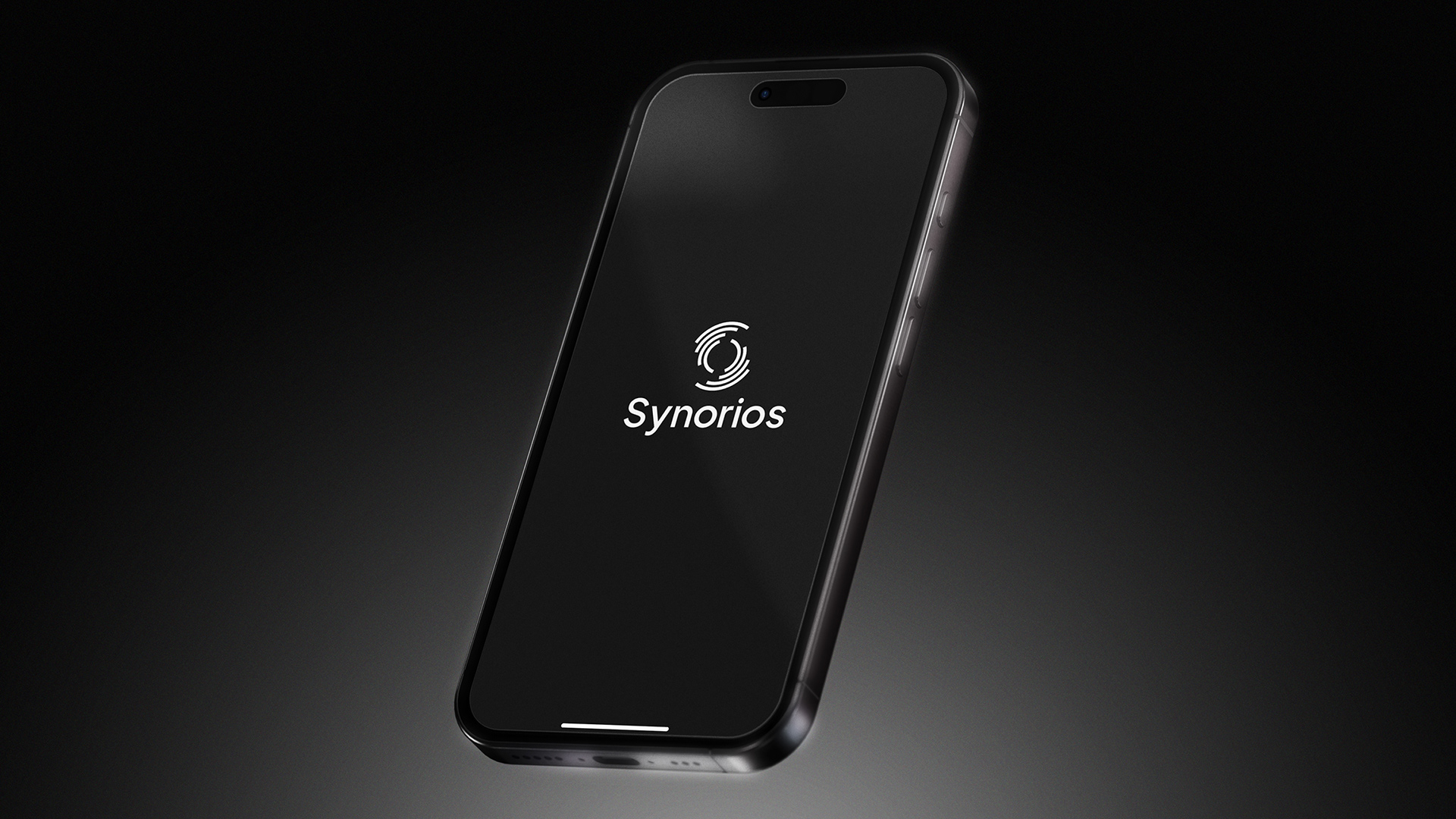
Role: Lead Product Designer
Duration: MVP 2 Weeks, total 4 months
Client: BAMHUB (Luxembourg)
Platform: AI-native SaaS
Responsibilities: Product Strategy • Workshops • UX • UI Design • Design System • Interactive Prototyping • AI-assisted Workflow • Developer Handoff
Duration: MVP 2 Weeks, total 4 months
Client: BAMHUB (Luxembourg)
Platform: AI-native SaaS
Responsibilities: Product Strategy • Workshops • UX • UI Design • Design System • Interactive Prototyping • AI-assisted Workflow • Developer Handoff
Overview
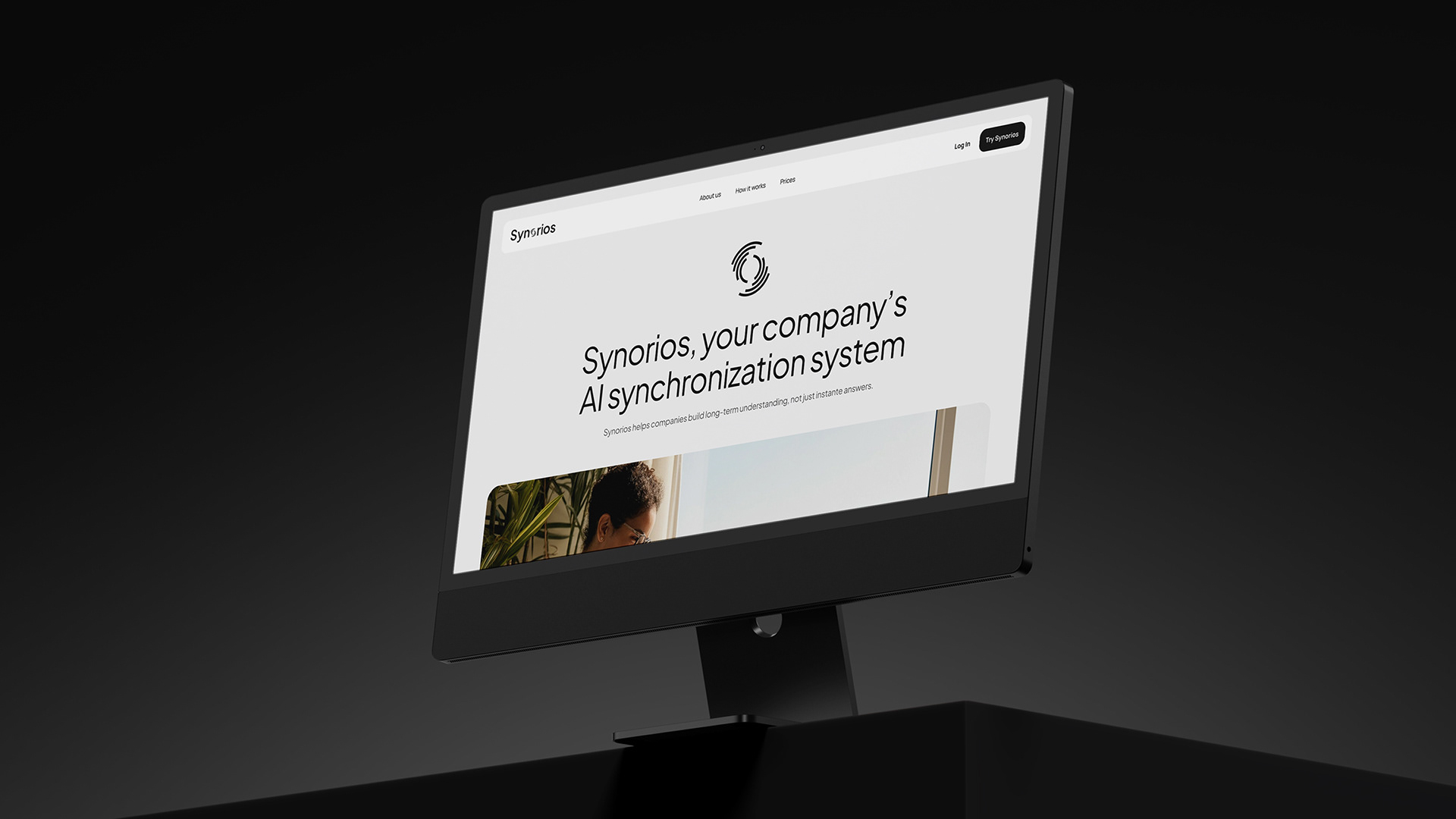
Synorios is an AI-native application developed by BAMHUB, a Luxembourg-based company. The product was conceived to solve one of the biggest limitations of today's AI assistants: their inability to maintain long-term understanding about users.
Instead of relying exclusively on conversation history, Synorios structures personal knowledge outside the chat itself, allowing the system to continuously learn from every interaction and deliver increasingly personalized responses over time.
I joined the project from day one as Lead Product Designer, partnering directly with the Founder to transform an early concept into a production-ready MVP within approximately two weeks. My work covered product definition, interaction design, visual language, Design System, prototyping and developer handoff.
The Challenge
Modern AI assistants become smarter every year, but their relationship with users remains surprisingly fragile. Every conversation starts almost from scratch, creating recurring usability problems:
- Conversations lose continuity.
- Users repeatedly explain the same information.
- Limited context windows restrict long-term understanding.
- Personalization gradually disappears over time.
- Users repeatedly explain the same information.
- Limited context windows restrict long-term understanding.
- Personalization gradually disappears over time.
The challenge wasn't to design another AI chat interface. It was to design an interaction model capable of preserving structured knowledge while remaining simple, intuitive and immediately familiar.
How can an AI continuously understand someone instead of continuously asking who they are?
My Role
As Lead Product Designer, I worked hands-on across every major design discipline throughout the project.
- Facilitated product definition workshops with the Founder and design team.
- Defined product vision and interaction model.
- Designed information architecture and user flows.
- Created wireframes and high-fidelity interfaces.
- Built the Design System alongside product development.
- Produced interactive prototypes for validation.
- Established AI-assisted workflows across the design process.
- Worked closely with engineering during implementation and handoff.
- Defined product vision and interaction model.
- Designed information architecture and user flows.
- Created wireframes and high-fidelity interfaces.
- Built the Design System alongside product development.
- Produced interactive prototypes for validation.
- Established AI-assisted workflows across the design process.
- Worked closely with engineering during implementation and handoff.
Product Vision
The product experience was designed around one central principle:
User - Knowledge Spheres - Persistent Understanding - Personalized AI - Every Interaction Improves
Rather than treating conversations as isolated events, the system continuously builds structured knowledge that evolves with the user.
Process
The project balanced speed with structure, allowing product definition and execution to evolve simultaneously.
Workshop: Worked directly with the Founder to define the product vision, identify the core problem, and align on the first product assumptions before any interface work began.
Concept: Explored different interaction models before converging on the idea of persistent knowledge organized into structured "Spheres".
User Flows: Designed the core user journeys and information architecture, translating abstract product ideas into intuitive navigation and interaction patterns.
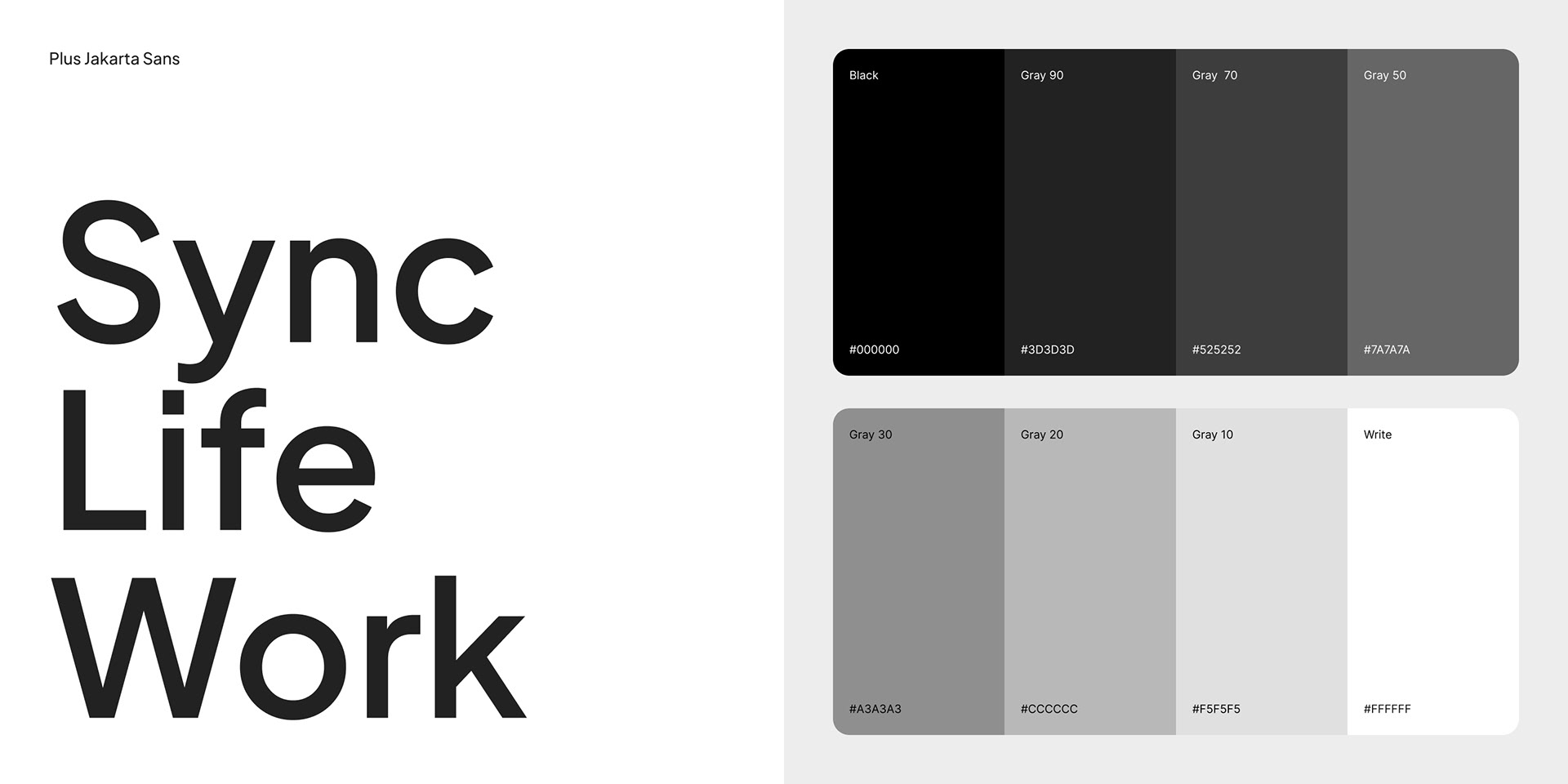
Design System: Built the Design System in parallel with product development, establishing reusable components, typography, spacing, colors and interaction patterns from the beginning.
Prototype: Created high-fidelity interactive prototypes that allowed rapid iteration while serving as the primary communication artifact between design, product and engineering.
Testing: Delivered a production-ready MVP for internal validation and product testing, supporting continuous iteration alongside engineering.
AI Workflow
Artificial intelligence became part of the design process rather than the product itself.
Product Thinking: ChatGPT and Claude used for product reasoning, concept refinement and strategic discussions.
Concept Exploration & Prototyping: Figma Make, Cursor accelerated interface exploration and early prototyping.
Microcopy: ChatGPT and Claude supported UX writing and interface consistency.
Documentation: Claude Code accelerated documentation and Design System organization.
Impact: Approximately 30% less design effort and 50% faster documentation

Solution
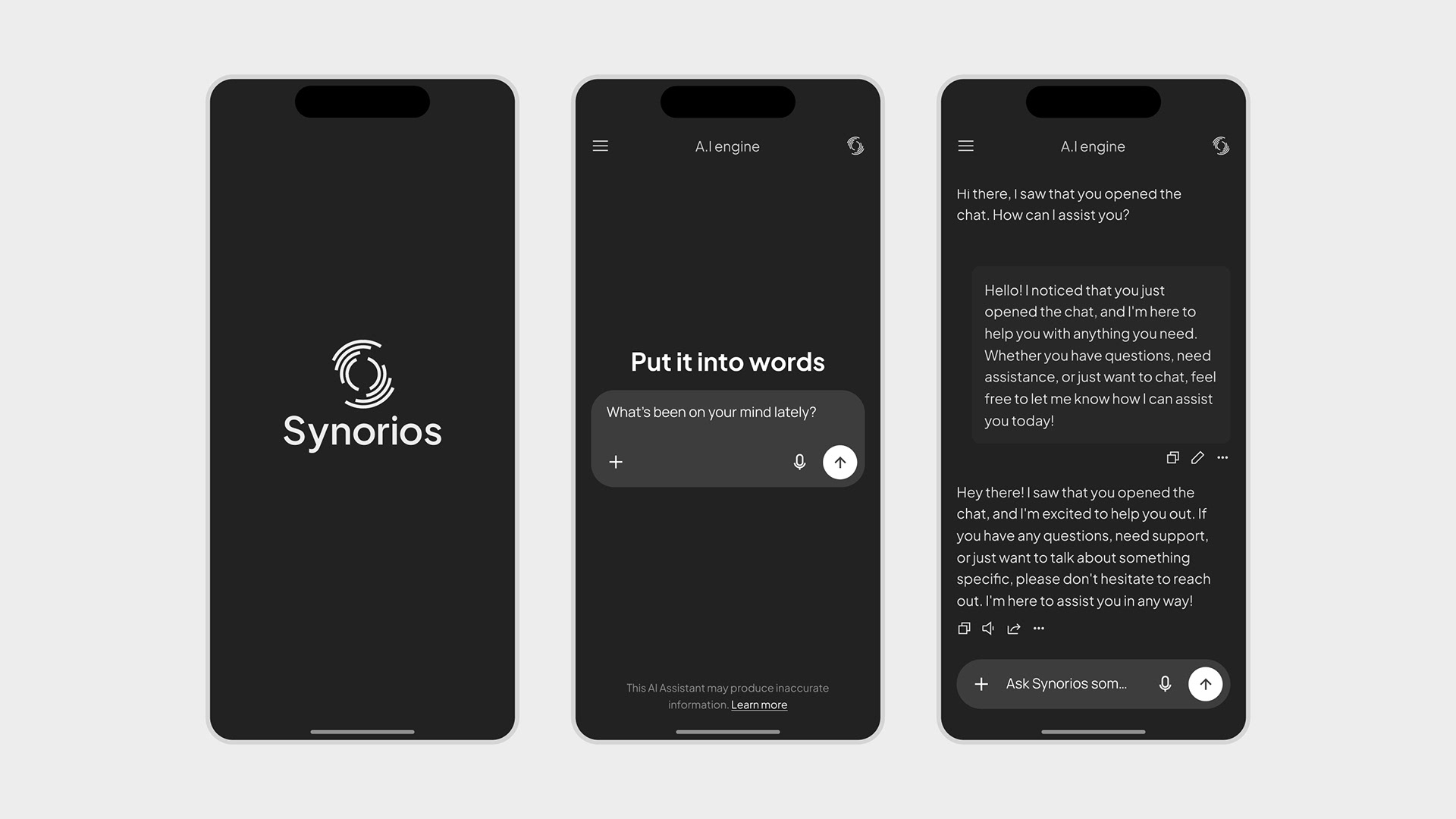
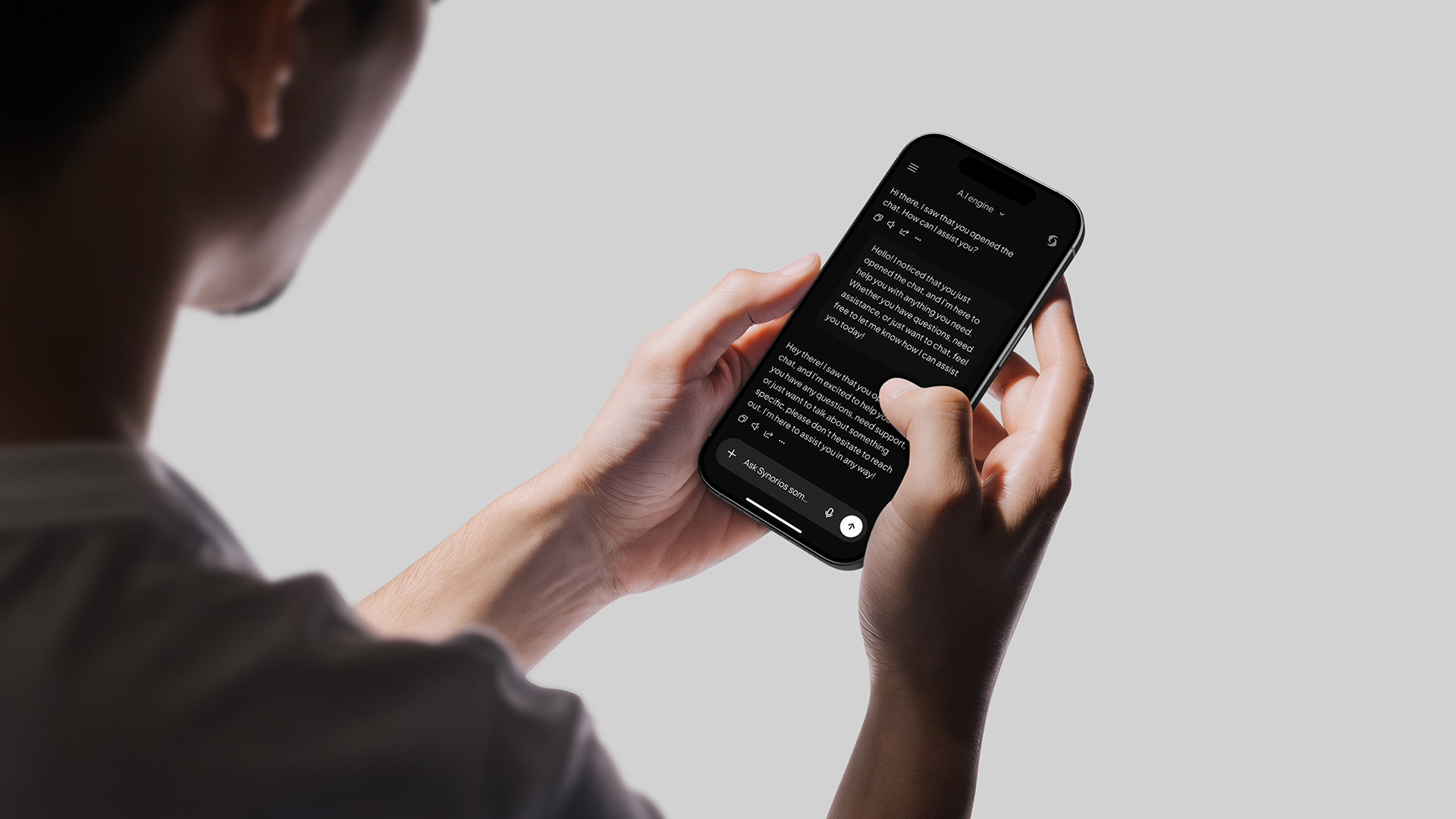
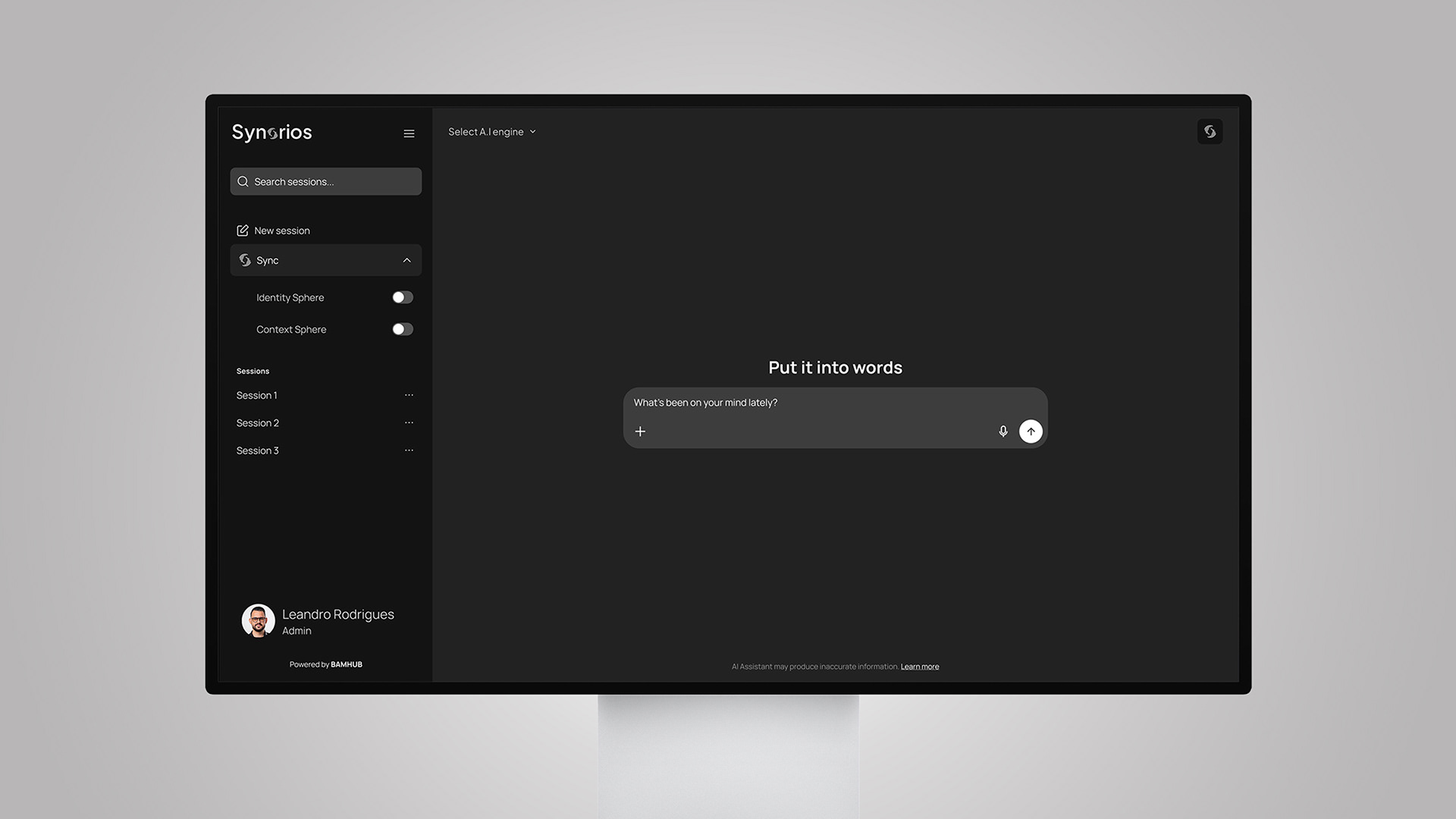
Synorios combines a familiar conversational interface with a structured model of persistent understanding. Instead of relying only on prompts and conversation history, the product organizes user knowledge into interconnected Knowledge Spheres, covering identity, work, relationships, preferences, context and other dimensions.
Each interaction enriches this knowledge base, allowing future conversations to become increasingly contextual without requiring users to repeat themselves.
Results
- Production-ready MVP delivered in approximately two weeks.
- AI-native interaction model successfully defined.
- 8 core user flows designed.
- Complete Design System established alongside product development.
- High-fidelity interactive prototype delivered.
- Product progressed into internal testing and validation.
- AI-assisted workflow reduced design effort by approximately 30%.
- Documentation time reduced by approximately 50%.
- AI-native interaction model successfully defined.
- 8 core user flows designed.
- Complete Design System established alongside product development.
- High-fidelity interactive prototype delivered.
- Product progressed into internal testing and validation.
- AI-assisted workflow reduced design effort by approximately 30%.
- Documentation time reduced by approximately 50%.
What I learned
This project reinforced three important ideas.
- Designing AI products isn't about creating another chat interface. It's about designing systems that allow intelligence to accumulate over time while keeping interactions simple for users.
- Building the Design System alongside product definition proved essential for maintaining consistency as the product evolved rapidly.
- AI doesn't replace product design. It amplifies product thinking, accelerates execution and allows designers to spend more time solving meaningful problems.
- Building the Design System alongside product definition proved essential for maintaining consistency as the product evolved rapidly.
- AI doesn't replace product design. It amplifies product thinking, accelerates execution and allows designers to spend more time solving meaningful problems.
Credits: BAMHUB
Lead Product Designer: Leandro Rodrigues
Product Designers: Hugo Barbosa e Rafael de Paula